Cow ghee vs buffalo ghee: which one should you buy? Both are pure desi ghee, both are used in Punjabi kitchens every day, and both have loyal fans. But they look, taste and behave differently. In this guide we compare cow ghee and buffalo ghee side by side (colour, texture, nutrition, taste, uses and price) so you can choose the right ghee for your family.
Cow Ghee vs Buffalo Ghee: Quick Comparison
| Point | Cow ghee | Buffalo ghee |
|---|---|---|
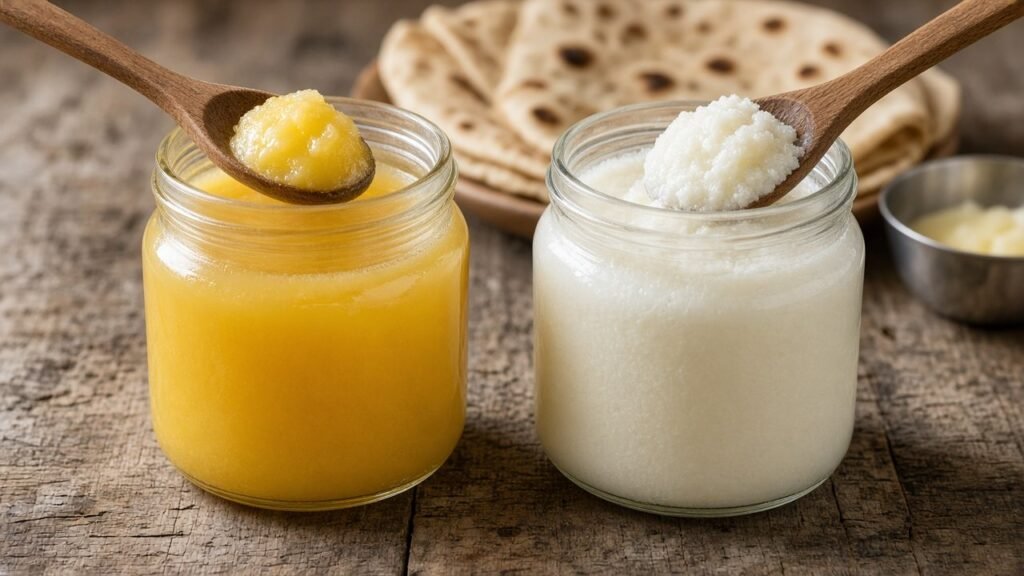
| Colour | Golden yellow | White to creamy white |
| Texture | Softer, lighter grain | Thicker, heavier, very danedar |
| Aroma | Strong, sweet, nutty aroma | Milder aroma, rich creamy taste |
| Feel | Lighter, easier for many people | Heavier and more filling |
| Fat in milk | Lower (cow milk has less fat) | Higher (buffalo milk is richer) |
| Best for | Daily cooking, kids, elders, pooja | Mithai, pinni, panjiri, parathas, halwa |
| Price | Usually higher per kg | Usually lower per kg |
Why Is Cow Ghee Yellow and Buffalo Ghee White?
This is the first difference everyone notices. Cow milk carries beta-carotene, a natural yellow pigment from green fodder, into its fat. That is why cow ghee has a golden yellow colour. Buffaloes convert most of this beta-carotene into vitamin A, so buffalo milk fat and buffalo ghee look white. A white colour does not mean buffalo ghee is impure. It is simply its natural colour.
Difference Between Cow and Buffalo Ghee in Texture and Taste
Buffalo milk has a much higher fat content than cow milk, so buffalo ghee sets thicker and grainier. Many people describe it as rich and “heavy”. Cow ghee is softer and lighter, with a stronger aroma that you can smell as soon as you open the jar. In cooking, cow ghee gives a fragrant finish to dal and rice, while buffalo ghee gives body and richness to sweets and fried foods.
Nutrition: Cow Ghee vs Buffalo Ghee
Both are almost pure milk fat, so their calories are very similar: roughly 110 to 120 kcal per tablespoon. The differences are small but worth knowing:
- Cow ghee is valued in Ayurveda as light and sattvic. Its yellow colour comes from beta-carotene, which the body can convert into vitamin A.
- Buffalo ghee comes from richer milk and is often chosen for energy, for growing teenagers and for people doing hard physical work.
- Both contain natural fat-soluble vitamins (A, D, E and K) and both have a high smoke point, which makes them stable for Indian cooking.
Whichever ghee you choose, use it in moderation. One to two teaspoons a day is a common amount. If you are managing cholesterol, heart health or weight, ask your doctor what is right for you.
Cow Ghee or Buffalo Ghee: Which Is Better?
There is no single winner. It depends on who is eating and what you are cooking:
Choose cow ghee if…
- You want a ghee for everyday cooking on dal, sabzi, roti and rice.
- You are cooking for young children or elders and want something lighter.
- You need ghee for pooja, havan or diya. Cow ghee is traditionally preferred.
- You love a strong ghee aroma in your food.
Choose buffalo ghee if…
- You make pinni, panjiri, gajar halwa, besan laddoo or other Punjabi mithai.
- You want crispy, rich parathas and fried snacks.
- You prefer a thick, danedar ghee with a creamy taste.
- You want good value for large quantities, for functions, langar or a sweet shop.
Many Punjabi homes simply keep both: cow ghee for daily meals and pooja, buffalo ghee for sweets and winter specials.
What About A2 Cow Ghee?
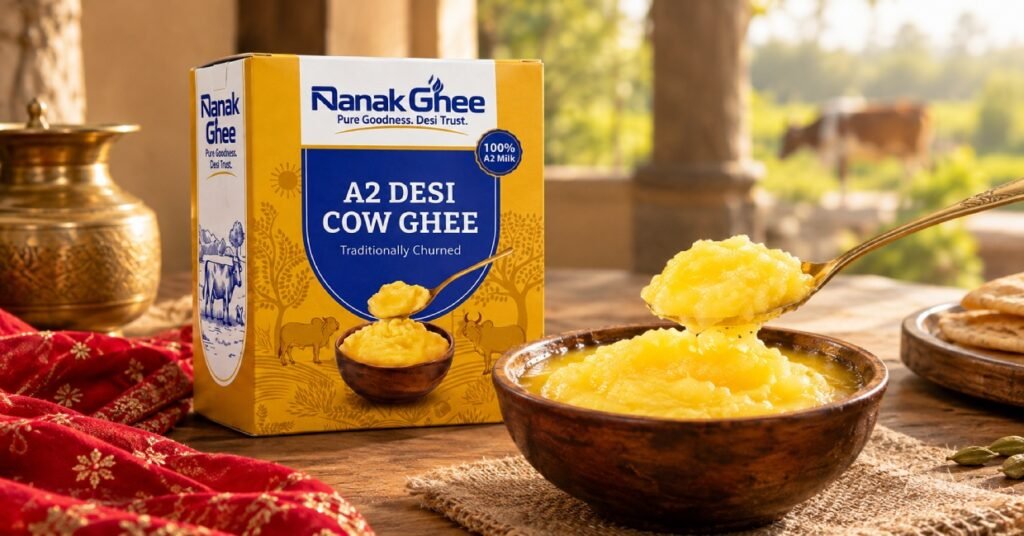
If you are choosing cow ghee, you will also see A2 cow ghee. A2 ghee is made from the milk of desi cow breeds whose milk contains the A2 type of beta-casein protein. Our A2 desi cow ghee is made with the traditional bilona method and is our most premium ghee. Learn more about the method in our guide to bilona ghee and its benefits.
Cow Ghee and Buffalo Ghee Price
Buffalo milk has more fat, so less milk is needed to make one kilogram of buffalo ghee. That is why buffalo ghee price per kg is usually lower than cow ghee. At Nanak Ghee, current prices for 1kg packs are:
- Bilona desi cow ghee: ₹1,550 per kg
- A2 desi cow ghee: ₹2,200 per kg
- Bilona-churned desi buffalo ghee: ₹1,200 per kg
All three are available in 500g, 1kg, 2kg and 5kg packs, and bigger packs work out cheaper per kg. See the latest prices on our shop page.
How to Make Sure Your Ghee Is Pure
Whether you buy cow or buffalo ghee, purity matters more than anything else. Adulteration with vanaspati, refined oil or starch is unfortunately common in loose ghee. Read our step-by-step guide on how to check purity of ghee at home for seven simple tests.
Buy Pure Cow Ghee and Buffalo Ghee from Nanak Ghee
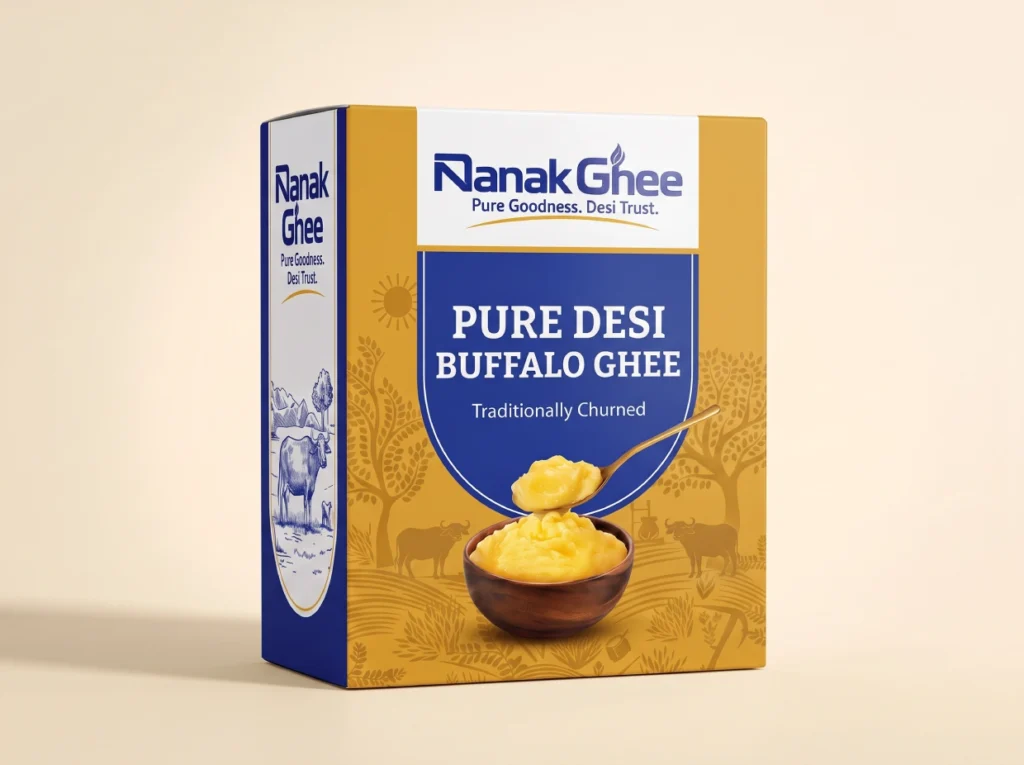
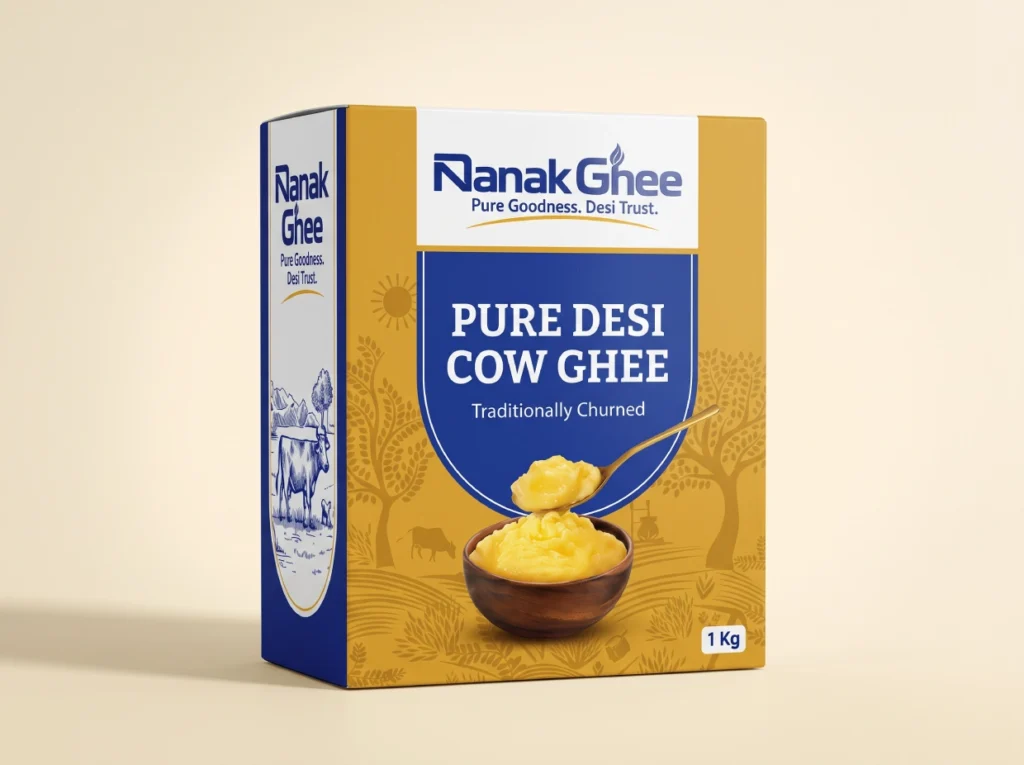
Nanak Ghee makes both cow and buffalo ghee the traditional bilona way in small batches in Sohana, Mohali, with no vanaspati, oil, colour or preservatives. Browse our cow ghee and buffalo ghee ranges, with home delivery in Mohali, Chandigarh, Zirakpur, Kharar and Panchkula and shipping across India.
Frequently Asked Questions
What is the difference between cow ghee and buffalo ghee?
Cow ghee is golden yellow, lighter and more aromatic. Buffalo ghee is white, thicker and richer because buffalo milk has more fat. Cow ghee is preferred for daily cooking, children and pooja, while buffalo ghee is preferred for mithai, parathas and fried food.
Which is healthier, cow ghee or buffalo ghee?
Both are pure milk fat with similar calories. Cow ghee is considered lighter and is traditionally recommended in Ayurveda, while buffalo ghee is richer and more filling. Use either in moderation as part of a balanced diet.
Is white ghee pure?
Yes, if it is buffalo ghee. Buffalo ghee is naturally white because buffaloes convert beta-carotene into vitamin A. Cow ghee, on the other hand, should be yellow.
Which ghee is best for babies and kids?
Cow ghee is traditionally given to children because it is lighter. Please check with your paediatrician before adding ghee to an infant’s diet.
Why is buffalo ghee cheaper than cow ghee?
Buffalo milk contains more fat, so less milk is needed to make one kilogram of ghee. This lowers the cost compared with cow ghee.
Can I use buffalo ghee for pooja?
Traditionally, pure cow ghee is preferred for pooja, havan and diya. Buffalo ghee is mostly used for cooking and sweets.