Bilona ghee is desi ghee made the way our grandmothers made it: milk is set into curd, the curd is churned into makkhan with a wooden bilona, and the makkhan is slowly cooked into golden, grainy ghee. In this guide we explain what bilona ghee really means, how the traditional bilona method works step by step, why it tastes and smells so different from regular ghee, and how to make sure the bilona ghee you buy is genuine.
What Is Bilona Ghee? (Bilona Meaning)
The word bilona comes from the Hindi and Punjabi word bilona or biloni, which means “to churn”. It also refers to the wooden churner itself, the madhani, that has been used in Indian homes for centuries. So bilona ghee meaning is simply “ghee made from churned curd”.
The key point is the starting material. In the bilona method the ghee is made from whole milk curd (dahi), not from cream or malai. Most factory ghee is made by separating cream from milk with a machine and heating that cream directly. That is quicker and cheaper, but it is not bilona ghee, even if the label says “desi”.
The Traditional Bilona Method: How Bilona Ghee Is Made
At Nanak Ghee in Sohana, Mohali we still follow the same five steps that Punjabi families have followed for generations:
- Fresh desi milk. Milk from healthy desi cows or buffaloes is collected fresh every morning.
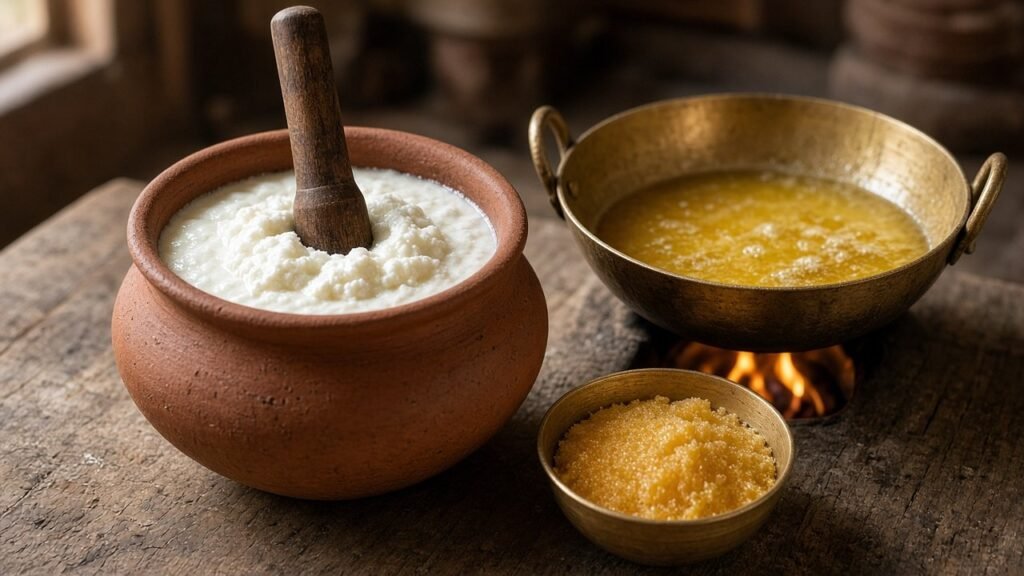
- Boiled and set into curd. The milk is boiled, cooled and set into curd overnight with a little dahi as a starter, exactly as it is done at home.
- Churned in a bilona. The next morning the curd is churned slowly with a wooden bilona. Churning separates fresh white makkhan (butter) from the lassi (buttermilk).
- Slow-cooked on a low flame. The makkhan is heated gently in a kadai. The water evaporates, the milk solids turn golden and settle, and the fat turns into clear ghee with a nutty aroma.
- Filtered and packed. The ghee is filtered and packed in small batches. As it cools it sets into the famous danedar (grainy) texture.
Because only the butter from the curd becomes ghee, the bilona method needs a lot of milk. A commonly quoted figure is around 25 to 30 litres of cow milk for one kilogram of bilona cow ghee. Buffalo milk is richer in fat, so it needs less. This is the main reason genuine bilona ghee costs more than ordinary ghee.
Bilona Ghee vs Regular Ghee: What Is the Difference?
| Point | Bilona ghee | Regular (cream) ghee |
|---|---|---|
| Made from | Whole milk curd, churned into makkhan | Cream or malai separated by machine |
| Process | Curd set overnight, hand or slow churned, slow-cooked | Cream heated directly, often in large batches |
| Texture | Grainy (danedar) when set | Often smooth or waxy |
| Aroma and taste | Rich, nutty, “ghar ka ghee” aroma | Milder, sometimes flat |
| Milk needed per kg | Much more (curd route) | Less (cream route) |
| Price | Higher | Lower |
The fermentation step is what gives bilona ghee its character. Setting milk into curd and then churning it creates the deep, slightly tangy-nutty flavour that people remember from village ghee.
Benefits of Bilona Ghee
Ghee has a special place in Indian kitchens and in Ayurveda. Here is why so many families are switching back to traditionally made bilona ghee:
- Real taste and aroma. A small spoon on dal, khichdi or a hot roti is enough to make the whole meal smell like home.
- Traditional, easy on the stomach. Ayurveda has long recommended ghee with everyday food. Many people find curd-churned ghee lighter than heavy cream ghee.
- Natural fat-soluble vitamins. Like all pure ghee, bilona ghee naturally contains fat-soluble vitamins such as A, D, E and K that come from milk fat.
- High smoke point. Ghee does not burn easily, which makes it good for tadka, deep frying, parathas and roasting.
- Nothing added. Real bilona ghee is only milk. No vanaspati, no palm oil, no colour and no preservatives.
- Long shelf life. Because the water and milk solids are removed, ghee keeps well at room temperature in a clean, dry, airtight jar.
Ghee is a concentrated fat, so enjoy it in moderation as part of a balanced diet. One to two teaspoons a day is how most families use it. If you have a medical condition, please speak to your doctor about the right amount for you.
Bilona Cow Ghee, A2 Bilona Ghee and Bilona Buffalo Ghee
The bilona method can be used with different milks, and each gives a different ghee:
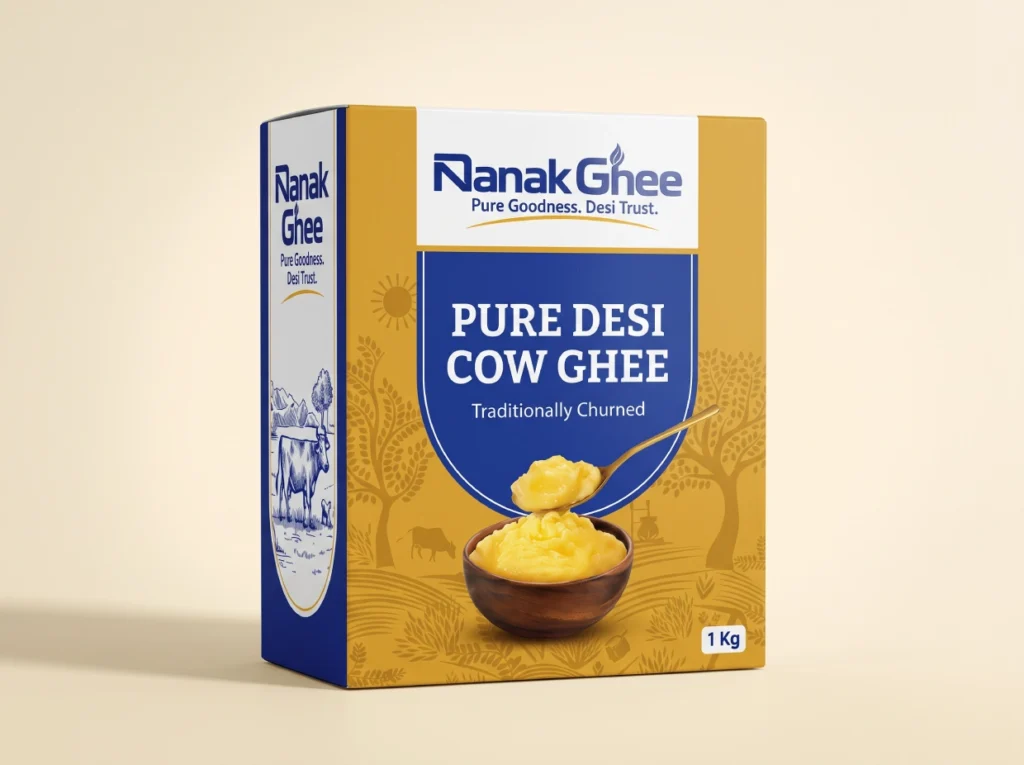
- Bilona desi cow ghee: golden yellow, light and aromatic. Ideal for daily cooking, children and pooja.
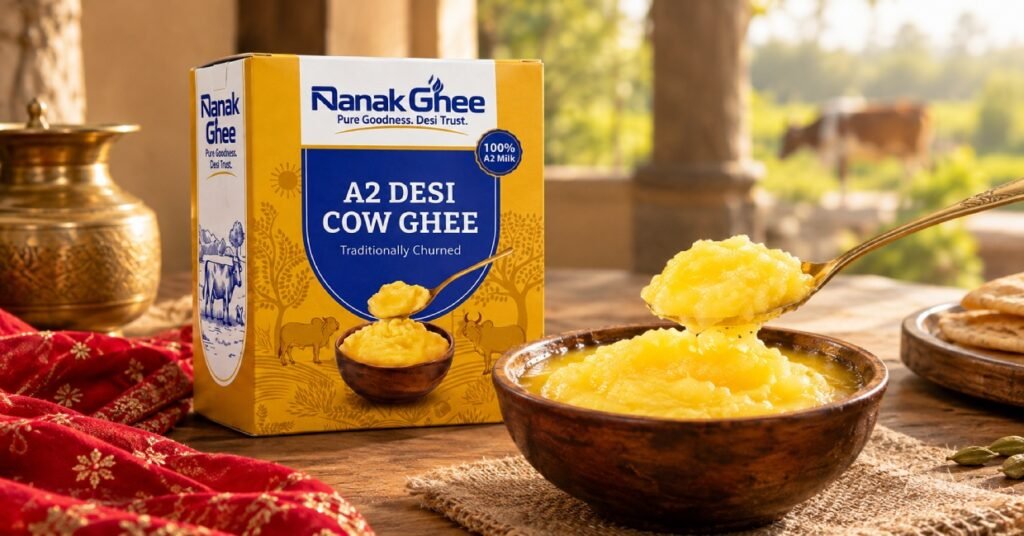
- A2 desi cow ghee: made with the bilona method from the milk of desi cow breeds whose milk has the A2 type of beta-casein protein. Our most premium ghee.
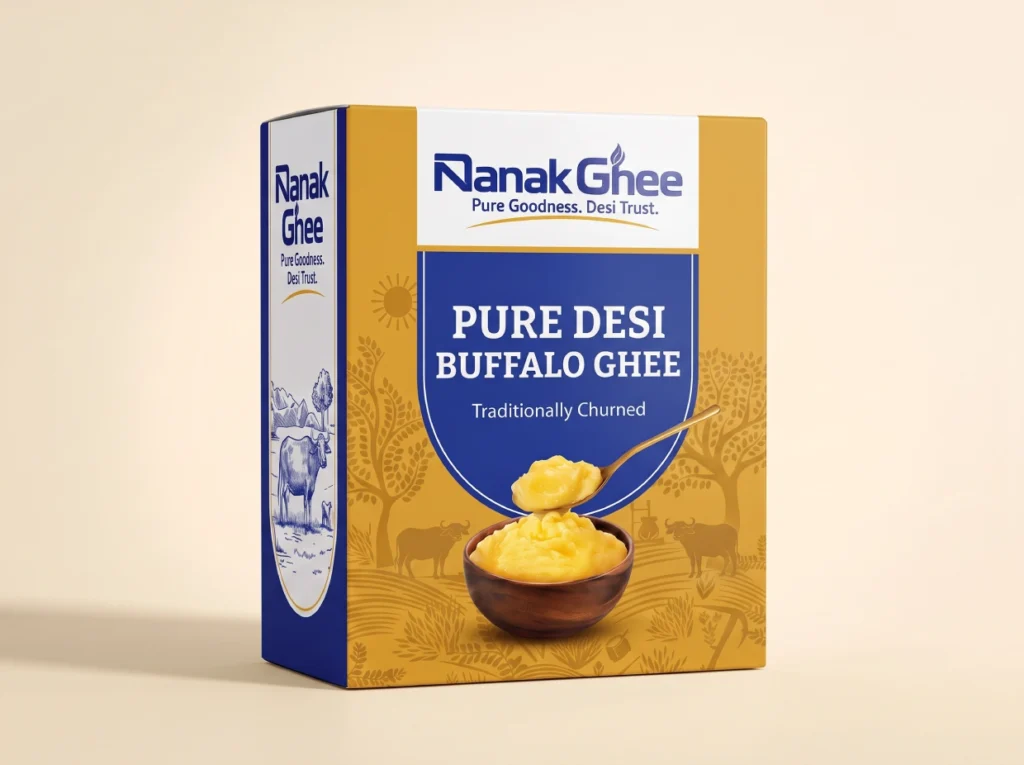
- Bilona buffalo ghee: white, thick and very rich. The favourite for pinni, panjiri, halwa, parathas and mithai.
Not sure which one suits your family? Read our detailed guide on cow ghee vs buffalo ghee.
How to Identify Genuine Bilona Ghee
Because bilona ghee sells at a higher price, some brands use the word “bilona” without following the method. A few simple checks help:
- Ask how it is made. A genuine maker will tell you clearly that the ghee is made from curd, not from cream.
- Look at the texture. Once it sets at room temperature, bilona ghee is usually grainy, not waxy.
- Smell it. Warm a spoonful. It should release a rich, nutty, clean aroma with no smell of oil.
- Check the price. If “bilona ghee” is priced like ordinary ghee, be careful. The milk needed simply makes that very difficult.
- Do a home test. Our guide on how to check purity of ghee at home explains seven easy tests.
How to Use Bilona Ghee Every Day
- Add a spoon to hot dal, rajma, kadhi or khichdi just before serving.
- Apply on fresh rotis and makki di roti, or use it to make crispy parathas.
- Use it for tadka with jeera, hing and garlic for a deeper flavour.
- Make halwa, pinni, panjiri, laddoo and other mithai the traditional way.
- Light a diya with pure cow ghee for daily pooja and festivals.
Buy Pure Bilona Ghee in Mohali, Chandigarh and Across India
Nanak Ghee makes bilona desi cow ghee, A2 desi cow ghee and bilona-churned desi buffalo ghee in small batches in Sohana, Mohali. All three come in 500g, 1kg, 2kg and 5kg packs. We deliver to homes in Mohali, Chandigarh, Zirakpur, Kharar and Panchkula, and ship across Punjab, Haryana and the rest of India.
Shop pure bilona ghee online or WhatsApp us on 97819 83883 for bulk orders.
Frequently Asked Questions
What is bilona ghee?
Bilona ghee is desi ghee made by setting whole milk into curd, churning the curd into makkhan with a wooden bilona, and slowly cooking the makkhan into ghee. Ghee made directly from cream or malai is not bilona ghee.
Is bilona ghee better than normal ghee?
Bilona ghee is made from curd instead of cream and is cooked slowly in small batches. This gives it a richer aroma, a grainy texture and the traditional taste many families prefer. Both are fats, so use either in moderation.
Why is bilona ghee so expensive?
The bilona method uses the butter from curd, so it needs much more milk per kilogram than cream-based ghee, and the slow churning and cooking take more time and labour.
Is A2 ghee the same as bilona ghee?
No. “A2” describes the type of milk (from desi cow breeds with A2 beta-casein), while “bilona” describes the method. Nanak A2 desi cow ghee is both: A2 milk made with the bilona method.
Can bilona ghee be made from buffalo milk?
Yes. Buffalo milk curd can be churned the same way. Bilona buffalo ghee is white, thicker and richer than cow ghee.
How should I store bilona ghee?
Keep it in a clean, dry, airtight jar away from direct sunlight and moisture. Always use a dry spoon. It does not need to be refrigerated.