Ghee and butter come from the same place, but they behave very differently in the kitchen and in your body. In this guide we compare ghee vs butter on smoke point, lactose, nutrition, taste and cost, so you can decide which one is right for your cooking.
What Is Ghee?
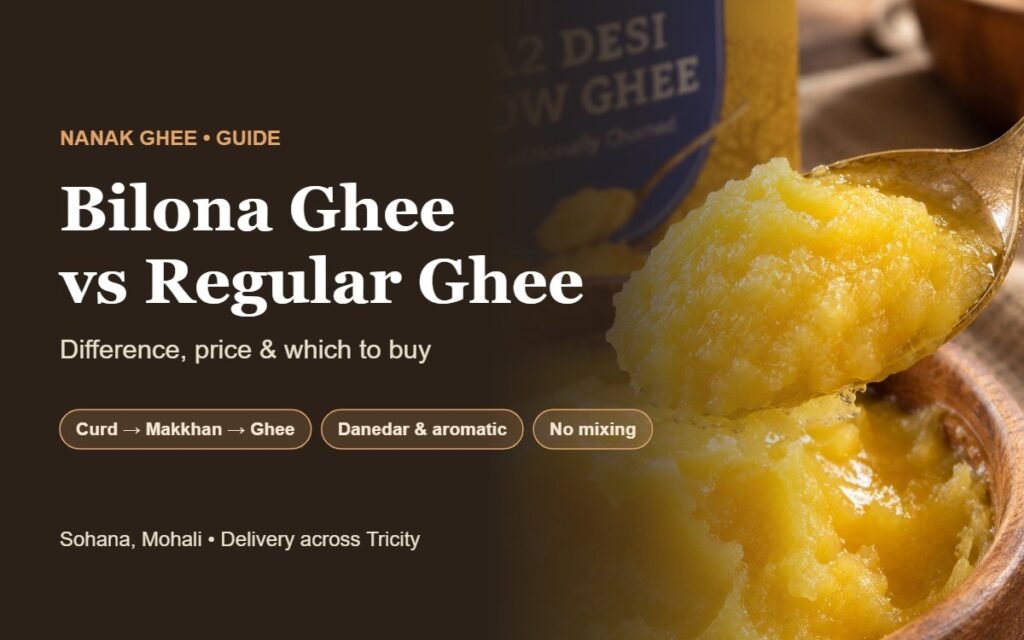
Ghee is a type of clarified butter that has been cooked a little longer, until the water evaporates and the milk solids turn golden and are strained out. The result is pure butterfat with a nutty, caramel-like aroma. In India, traditional bilona ghee is made from cultured curd rather than cream, which gives an even richer flavour.
Ghee vs Butter: Quick Comparison
| Point | Ghee | Butter |
|---|---|---|
| Smoke point | About 250°C (482°F) | About 150–175°C (302–350°F) |
| Lactose and casein | Trace amounts only | Present |
| Water content | Almost none | Around 15–18% |
| Calories per tablespoon | About 120 | About 100 |
| Shelf life | Months at room temperature | Needs refrigeration |
| Flavour | Nutty, toasted, aromatic | Creamy, mild |
Smoke Point: Why Ghee Wins for High-Heat Cooking
The ghee smoke point is roughly 250°C (482°F), far higher than butter. Butter’s milk solids start to burn at lower temperatures, which is why butter browns and smokes quickly in a hot pan. Ghee is ideal for searing, stir-frying, roasting vegetables and Indian tadka.
Is Ghee Lactose Free?
Ghee is nearly lactose free. Most of the lactose and casein are removed with the milk solids, leaving only trace amounts. Many people with mild lactose intolerance can enjoy ghee without trouble. However, it is not guaranteed to be completely dairy free, so people with a diagnosed milk allergy should check with their doctor.
Nutrition: Is Ghee Healthier Than Butter?
Gram for gram, ghee and butter have a similar nutrient profile because both are mostly milk fat. Ghee is slightly more concentrated, so it has a few more calories per tablespoon. Both contain fat-soluble vitamins A, D, E and K and butyric acid. The main advantages of ghee are its stability at high heat, its lower lactose content and its stronger flavour, which means a little goes a long way. See more benefits of desi ghee.
Taste and Uses
- Use ghee for: frying, roasting, sautéing, Indian curries and dals, rice, popcorn, coffee, and spreading on hot roti or toast.
- Use butter for: baking that needs water and milk solids for texture, creamy sauces, and spreading on bread when you want a mild flavour.
Can I Substitute Ghee for Butter?
Yes, in most cooking you can swap ghee for butter 1:1. For baking, use slightly less ghee (about three-quarters of the amount) because ghee contains no water.
Cow Ghee or Buffalo Ghee?
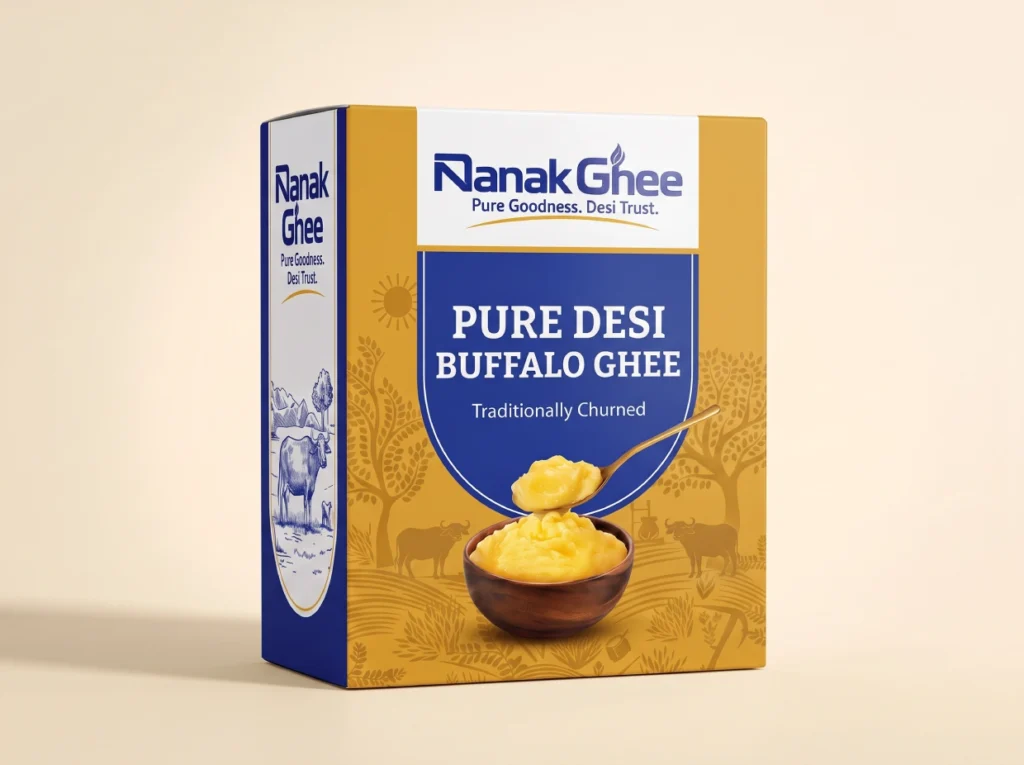
Cow ghee is golden and lighter, while buffalo ghee is white and richer. Both work well in place of butter. Read our full cow ghee vs buffalo ghee comparison.
How to Choose Good Ghee
- Look for ghee made from grass-fed or desi cow milk.
- Prefer traditionally made, small-batch ghee.
- Check that the ingredient list says only milk fat or cultured cream/curd.
- Use our ghee purity tests at home.
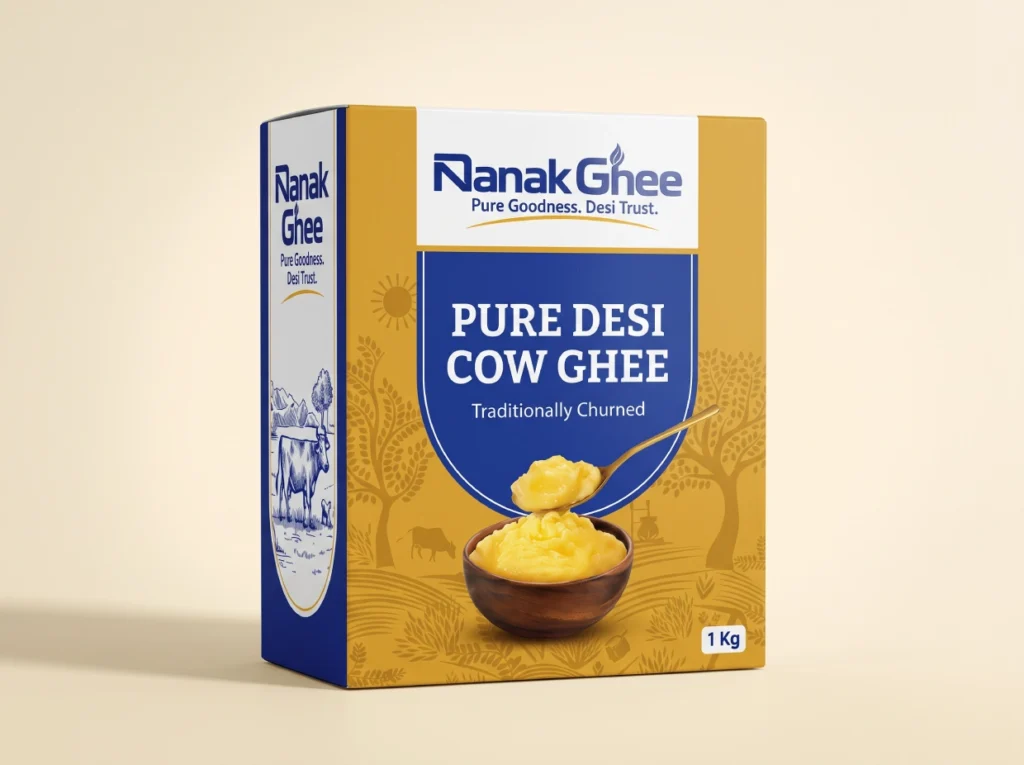
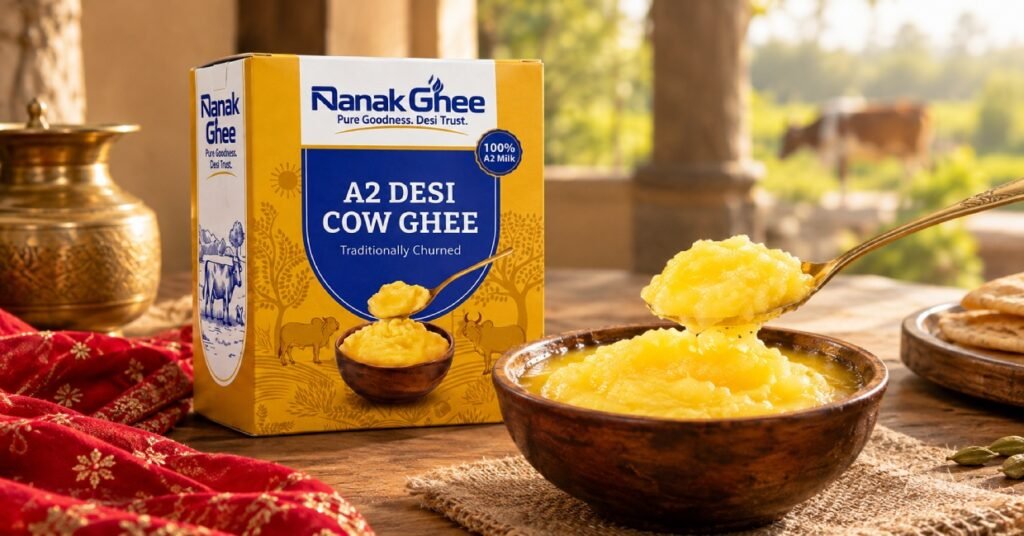
Nanak Ghee makes A2 desi cow ghee, bilona cow ghee and buffalo ghee the traditional bilona way in Punjab, India.
Ghee vs Butter: Frequently Asked Questions
Is ghee better than butter?
For high-heat cooking and for people sensitive to lactose, ghee is usually the better choice. For baking, butter often works better.
What is the smoke point of ghee?
About 250°C (482°F), compared with about 150–175°C (302–350°F) for butter.
Is ghee dairy free?
No. Ghee comes from milk, but it contains only trace amounts of lactose and casein.
Does ghee need to be refrigerated?
No. Kept in a clean, airtight jar and used with a dry spoon, ghee stays fresh for months at room temperature.
What does ghee taste like?
Ghee tastes nutty, toasty and richer than butter, with a slight caramel aroma.